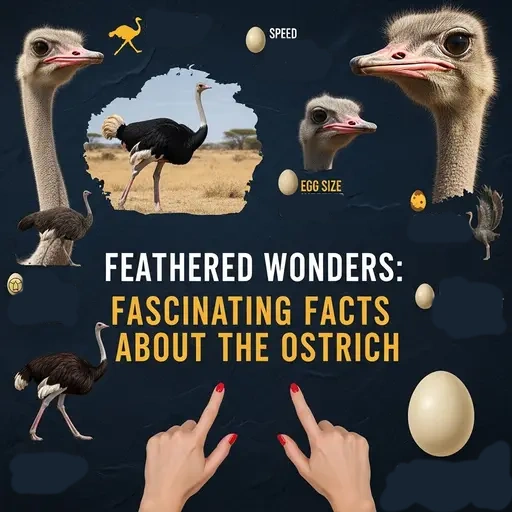
1. The Fastest Runner
The ostrich is the fastest bird on land. Capable of reaching speeds up to 70 km/h (43 mph) with strides of up to 5 meters (16 feet), this incredible running ability is crucial for escaping predators.
2. Giant Eggs, Giant Chicks
Ostrich eggs are the largest of any living bird, weighing around 1.4 kg (3.1 lbs) and measuring approximately 15 cm (6 inches) long. An ostrich egg is equivalent to about two dozen chicken eggs. The incubation period is roughly 42 days, and both parents share incubation duties.
3. Poor Eyesight, Great Vision
Despite a common myth, ostriches do not have poor eyesight. Their eyes are the largest of any land vertebrate, measuring about 5 cm (2 inches) in diameter, giving them exceptional vision and a panoramic view of their surroundings, crucial for spotting danger at great distances.
4. Two-Toed Feet
An unusual adaptation of the ostrich is its feet, which possess only two toes. The larger, inner toe has a formidable claw and is used for defense and locomotion, similar to a hoof, while the smaller, outer toe aids in balance.
5. Stomach Stones for Digestion
As they lack teeth, ostriches swallow small stones, gravel, and sand, known as gastroliths. These "stomach stones" accumulate in their muscular gizzard and help grind down tough plant matter, aiding digestion of their varied diet of seeds, grasses, and insects.
6. Powerful Kicks for Defense
While flightless, ostriches are formidable defenders. Their powerful legs can deliver a devastating kick, capable of repelling predators like lions and humans. This kick is their primary defense mechanism against threats.
7. Social Flockers
Ostriches typically live in nomadic groups of 10 to 20 birds, although larger flocks can form seasonally. These social structures provide safety in numbers, allowing for better predator detection and foraging.