01. Peter.
Peter had other names, at the time of Christ, the common language was Greek and the family language was Hebrew. So his Greek name was Simon, and his Hebrew name was Simeon, Saint Peter was also known as Simon Peter, and was called Cephas by Jesus.
As Simon was one of the 12 disciples. He was also one of the first leaders of the early church.
Simon Peter, was the son of Jonas and was a fisherman who was born in Bethsaida and also lived in Capernaum. He did evangelistic and missionary work among the Jews, going as far as Babylon.
Peter was crucified in Rome by Emperor Nero who accused Christians of the Rome fire in year 64. He ordered the crucifixion of all Christians.
St. Peter was crucified in Nero’s Circus which was near Vatican Hill. This exact location is where the Vatican is located, hence the name of the church St. Peter's Basilica.
His final request before crucifixion was to be crucified upside down. This was because he felt he was not worth being crucified upright like Jesus.
02. Andrew.
Andrew was the brother of Simon Peter, and a son of Jonas, Like Simon Peter he was a fishermen by trade, working on the Sea of Galilee. He lived in Bethsaida and Capernaum. Originally he was a disciple of John the Baptist.
Jesus said to Simon Peter and Andrew "Come, follow me, and I will send you out to fish for people." After this they left their nets to follow Jesus.
According to tradition, Andrew faced martyrdom by crucifixion, and was bound to the Latin-shaped cross where he died as a martyr, another tradition developed later according to which Andrew was crucified on an X shaped cross today known as the cross of Saint Andrew.
03. James son of Zebedee.
James, the Elder, Boanerges, son of Zebedee and Salome, brother of John the Apostle; a fisherman who lived in Bethsaida, Capernaum and Jerusalem. He preached in Jerusalem and Judea and became the first apostolic martyr when he was beheaded by Herod.
James was also a fisherman on the Sea of Galilee when Jesus came along and as soon as he heard Jesus call, he decided to follow him.
The Catholic Church believes that his remains (relics) are held in the Cathedral of Santiago de Compostela in northwest Spain.
04. James son of Alphaeus.
James, the Lesser or Younger, son of Alpheus, or Cleophas and Mary, lived in Galilee. He was the brother of the Apostle Jude.
Not much is known of James but according to tradition he wrote the Epistle of James, preached in Palestine and Egypt and was crucified in Egypt.
The feast day of St. James, the son of Alphaeus, is celebrated in various Christian traditions on different dates. In the Roman Catholic Church, it is often observed on May 3rd.
05. Bartholomew.
Bartholomew Nathanael, son of Talmai, lived in Cana of Galilee.
Tradition says he was a missionary in Armenia. A number of scholars believe that he was the only one of the 12 disciples who came from royal blood, or noble birth.
06. John.
John Boanerges, son of Zebedee and Salome, brother of James, the Apostle, just like his brother and they both accepted the call of Jesus to follow him. He was known as the Beloved Disciple. A fisherman who lived in Bethsaida, Capernaum and Jerusalem.
07. Judas Iscariot, later replaced with Matthias.
Judas Iscariot, the traitor, was the son of Simon who lived in Kerioth of Judah. He betrayed Jesus to the priests of the temple for thirty pieces of silver and afterwards hanged himself.
The gospels claim that Judas identified Jesus to the Jewish authorities in the Garden of Gethsemane with a kiss, a prearranged signal to indicate whom they should arrest.
There is no certain reason as to why Judas betrayed his master; but it is not his betrayal that put Jesus on the cross, it was our sins.
After his betrayal the disciples nominated two men, Joseph called Barsabbas (also known as Justus) and Matthias. Then they prayed, Lord, you know the heat of everyone, show us which of these two you have chosen to take over this apostolic ministry, which Judas left to go where he belongs. Then they cast lots, and the lot fell to Matthias; so he was added to the then eleven apostles.
08. Judas, or Jude son of James.
Jude, Thaddeus, or Lebbeus, son of Alpheus or Cleophas and Mary. He was a brother of James the Younger. He was one of the very little-known Apostles and lived in Galilee. Later Church tradition suggests that Thaddeus may have engaged in missionary activities after the resurrection of Jesus preaching in Assyria and Persia and died a martyr in Persia.
In Mark he is called Thaddeus. In Matthew he is called Lebbeus. His surname was Thaddeus. In Luke and Acts he is called Judas the brother of James. Judas Thaddeus also was called Judas the Zealot.
09. Matthew.
Matthew, or Levi, son of Alpheus, lived in Capernaum. He was a publican or tax collector. He wrote the Gospel that bears his name. He died a martyr in Ethiopia.
10. Philip.
Tradition says that disciple Philip preached in Phrygia and died a martyr at Hierapolis. Philip came from Bethsaida, the town from which Peter and Andrew came.
When Jesus called Philip to follow him, Philip, in turn, invited Nathanael to meet Jesus.
Philip is involved in the famous account of the feeding of the 5,000, when Jesus asks Philip where they could buy bread to feed the large crowd, Philip responds with scepticism: "It would take more than half a year’s wages to buy enough bread for each one to have a bite".
11. Simon.
Simon, the Zealot, one of the little-known followers called the Canaanite or Zelotes, lived in Galilee. Tradition says he was crucified.
Some have argued that the term "Zealot" refers to Simon's previous association with the Zealots, a political movement that sought to resist Roman rule in Judea though the Zealots were perhaps not known at the time of Jesus.
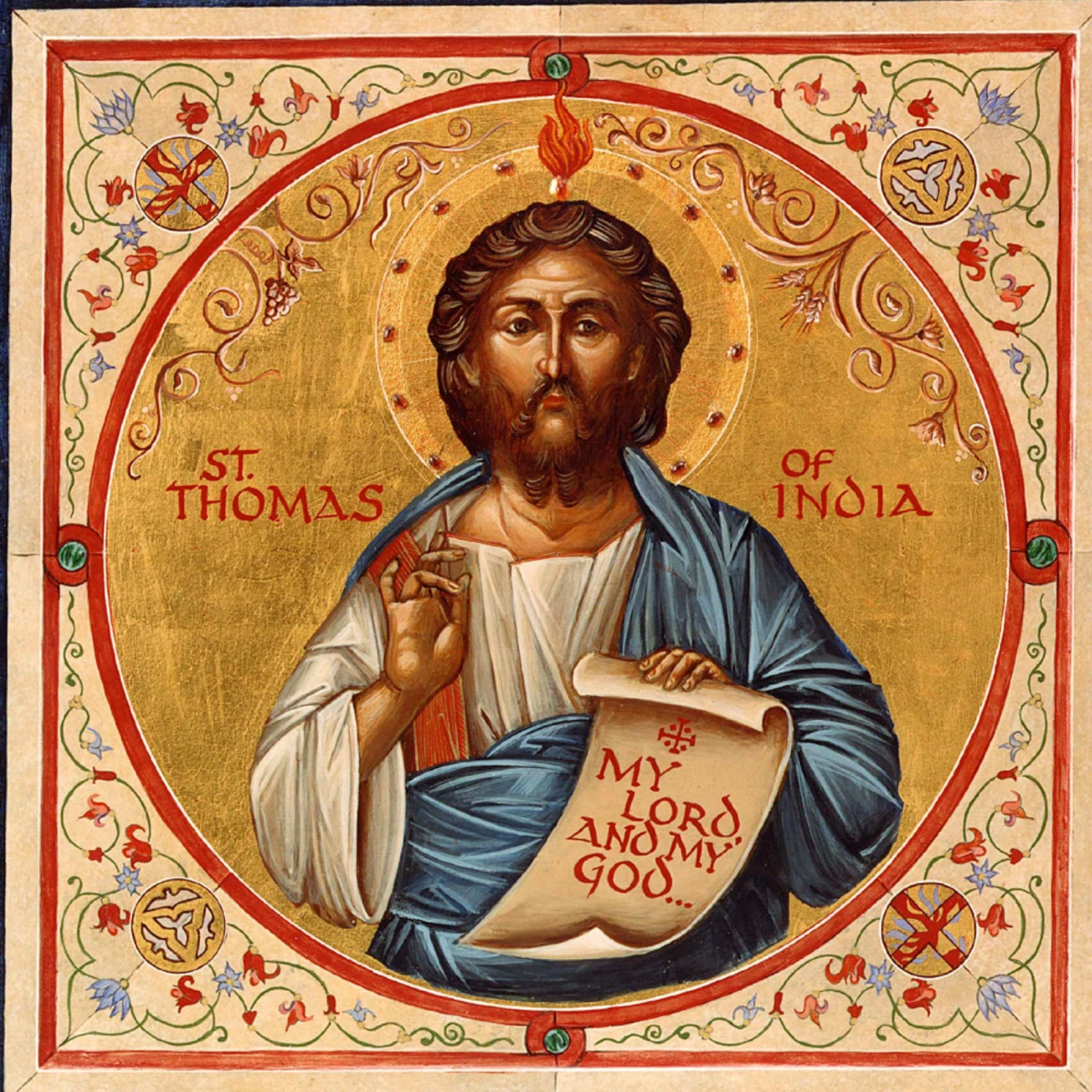
12. Thomas.
Thomas Didymus lived in Galilee and was a first century missionary. Tradition says he laboured in Parthia, Persia, and then India in 52 AD and spread the Gospel there, and founded churches, eventually suffering martyrdom near Madras, at Mt. St. Thomas, India.
Didymus, which means "the Twin." The name "Thomas" itself is also derived from an Aramaic word meaning "twin.".
Thomas was often known as Doubting Thomas, due to an incident recorded in John where Thomas expressed scepticism about the possibility of resurrection of Jesus. Thomas insisted on seeing and touching the wounds of Jesus before believing. Jesus then appeared to Thomas, who exclaimed, "My Lord and my God!".