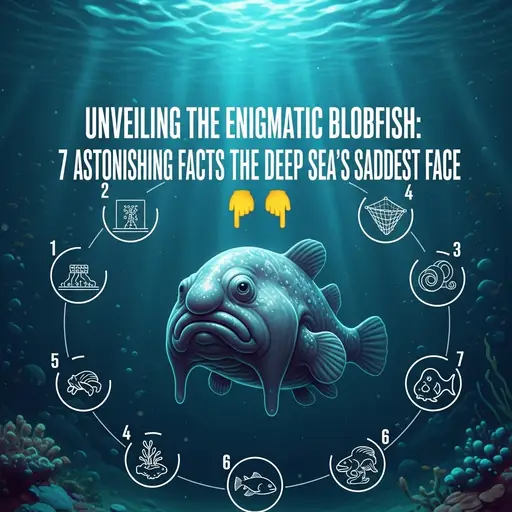
1. A Gelatinous Marvel
1. A Gelatinous Marvel: The blobfish's body is primarily composed of a gelatinous mass with a density slightly less than water. This allows it to float effortlessly above the seafloor without expending much energy. This unique composition is a direct adaptation to the immense pressures of its deep-sea environment, where swim bladders, common in other fish, would collapse. Its skin is a loose, flabby jelly, contributing to its distinctive 'sad' appearance when observed out of its natural context.
2. Deep-Sea Home
2. Deep-Sea Home: Blobfish inhabit the waters off the coasts of mainland Australia and Tasmania, at depths ranging from 600 to 1,200 meters (2,000 to 3,900 feet). This abyssal zone is characterized by extreme hydrostatic pressure, near-freezing temperatures, and complete darkness. Their environment dictates their entire physiology and lifestyle, making them highly specialized organisms.
3. Ambush Predator Strategy
3. Ambush Predator Strategy: Lacking significant musculature, the blobfish is not an active hunter. Instead, it employs an ambush predation strategy. It drifts along the seabed, waiting for small prey like crustaceans and mollusks to pass by. When prey is within reach, the blobfish opens its mouth and engulfs it with minimal effort, conserving precious energy in its resource-scarce habitat.
4. No Bones About It
4. No Bones About It: To withstand the crushing pressures of the deep ocean, the blobfish has a skeletal structure that is much softer and more pliable than that of surface-dwelling fish. It primarily consists of cartilage rather than calcified bone. This adaptation prevents its skeleton from fracturing under the immense weight of the water column above, a crucial survival mechanism for life at such depths.
5. Egg Protection Duty
5. Egg Protection Duty: Female blobfish are believed to lay large clutches of eggs and then guard them. While direct observation is rare, it is hypothesized that they remain with their eggs until they hatch, protecting them from predators and ensuring their survival. This parental care behavior is not common among many deep-sea fish, suggesting a more complex reproductive strategy for the blobfish.
6. The 'Sad Face' Illusion
6. The 'Sad Face' Illusion: The blobfish's famously 'sad' or 'ugly' appearance is a direct result of decompression when brought to the surface. The drastic change in pressure causes its gelatinous flesh to expand and its features to sag. In its natural habitat, under extreme pressure, it likely looks more like a typical fish, with its features held more firmly in place.
7. Trawling Threats
7. Trawling Threats: The blobfish faces a significant threat from deep-sea trawling, a fishing method that drags heavy nets across the ocean floor. This destructive practice inadvertently catches blobfish, which are not a target species but are caught as bycatch. This has led to concerns about the conservation status of the blobfish and the impact of human activities on deep-sea ecosystems.