1. Not a Single Wall
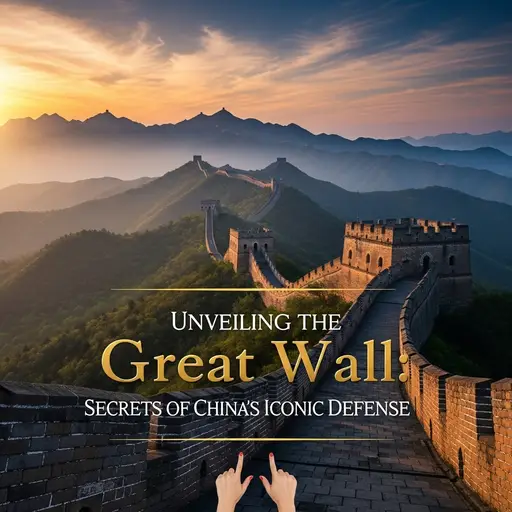
Not a Single Continuous Structure. The Great Wall is actually a series of fortifications made of stone, brick, tamped earth, wood, and other materials, built along an east-to-west line across the historical northern borders of China.
2. Built Over Centuries
Construction Spanned Dynasties. The earliest sections were built as far back as the 7th century BC, with major construction and consolidation occurring during the Qin, Han, and Ming dynasties, each adding and modifying sections to suit their specific defensive needs and territorial boundaries.
3. Primarily Ming Dynasty Sections Visible Today
Most Iconic Sections Hail from the Ming Dynasty. The most well-preserved and widely visited portions of the Great Wall, such as Badaling, Mutianyu, and Jinshanling, were primarily built or rebuilt during the Ming Dynasty (1368–1644) using brick and stone, replacing earlier earthen fortifications.
4. Defense Against Nomadic Invaders
A Shield Against Northern Nomads. The primary purpose of the Great Wall was to protect Chinese states and empires against raids and invasions by various nomadic groups from the Eurasian Steppe, such as the Xiongnu, Mongols, and Manchus.
5. Sophisticated Watchtowers and Barracks
Integrated Military Infrastructure. The Wall wasn't just a barrier; it incorporated numerous watchtowers, barracks, garrison stations, and signaling towers. These allowed for rapid communication through smoke signals and flags, troop deployment, and supply depots, forming a comprehensive defensive system.
6. Not Visible from the Moon
6. The Myth of Lunar Visibility. Despite popular belief, the Great Wall of China is not visible from the Moon with the naked eye. While it is visible from low Earth orbit under certain conditions, it's far from what the 'visible from the Moon' claim suggests.
7. UNESCO World Heritage Site
Global Recognition as a Cultural Treasure. Designated a UNESCO World Heritage Site in 1987, the Great Wall of China is recognized for its historical significance, architectural ingenuity, and its role in shaping Chinese civilization and defense strategies over two millennia.